RSS Pathways Unlocked: How Authentication, Uploads, and Legal Rules Shape Video Discovery in Community Media Systems
Quinn Brooks · Oct 20, 2026
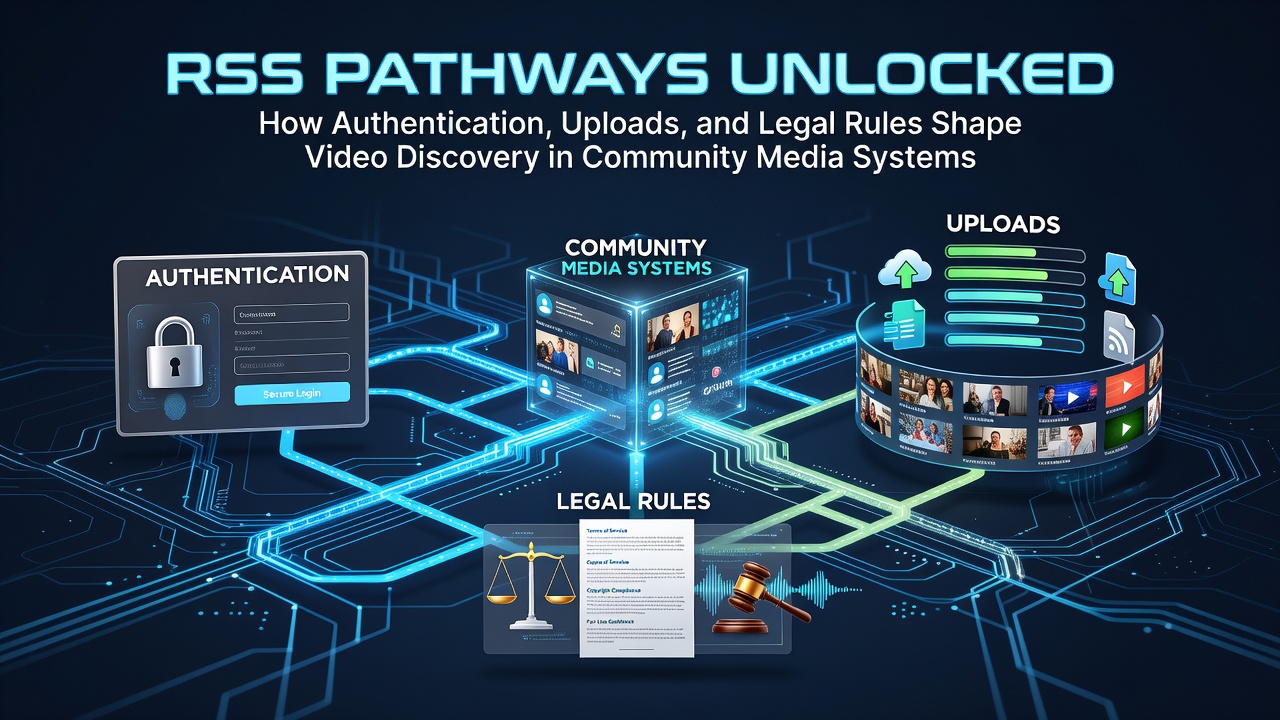
RSS Pathways Unlocked: How Authentication, Uploads, and Legal Rules Shape Video Discovery in Community Media Systems
Community media systems rely on RSS feeds to distribute video content efficiently, yet authentication mechanisms, upload protocols, and legal frameworks determine which videos reach audiences through those feeds. Observers note that in October 2026 platforms such as GamingWorldTV continued to refine these elements, with authentication serving as the initial gatekeeper that verifies user credentials before any upload occurs.
Authentication as the Foundation for RSS Visibility
Authentication processes require users to complete verified login steps that link accounts to specific permissions, and these steps directly influence whether uploaded videos appear in RSS channels. Researchers have documented that multi-factor verification reduces unauthorized entries while simultaneously restricting content from unverified contributors, which in turn narrows the pool of material available for RSS syndication. Data from industry reports shows that platforms enforcing stricter authentication see higher compliance rates with content guidelines, leading to more consistent RSS outputs that search engines and aggregators index reliably.
Those who manage community systems observe that authentication also ties into user roles, where administrators grant tiered access that controls upload frequency and format requirements. This structure ensures RSS feeds receive only approved media types, preventing mismatches that could break feed compatibility across different readers and applications.
Upload Mechanisms and Their Effect on Discovery Pathways
Upload workflows incorporate metadata tagging, format validation, and categorization tools that feed directly into RSS generation processes. When users complete uploads through authenticated sessions, the system attaches details such as titles, descriptions, and thumbnails that RSS readers then display to subscribers. Evidence from media platform analyses indicates that streamlined upload interfaces increase the volume of content entering RSS channels, whereas complex validation steps slow the pipeline and reduce overall feed activity.
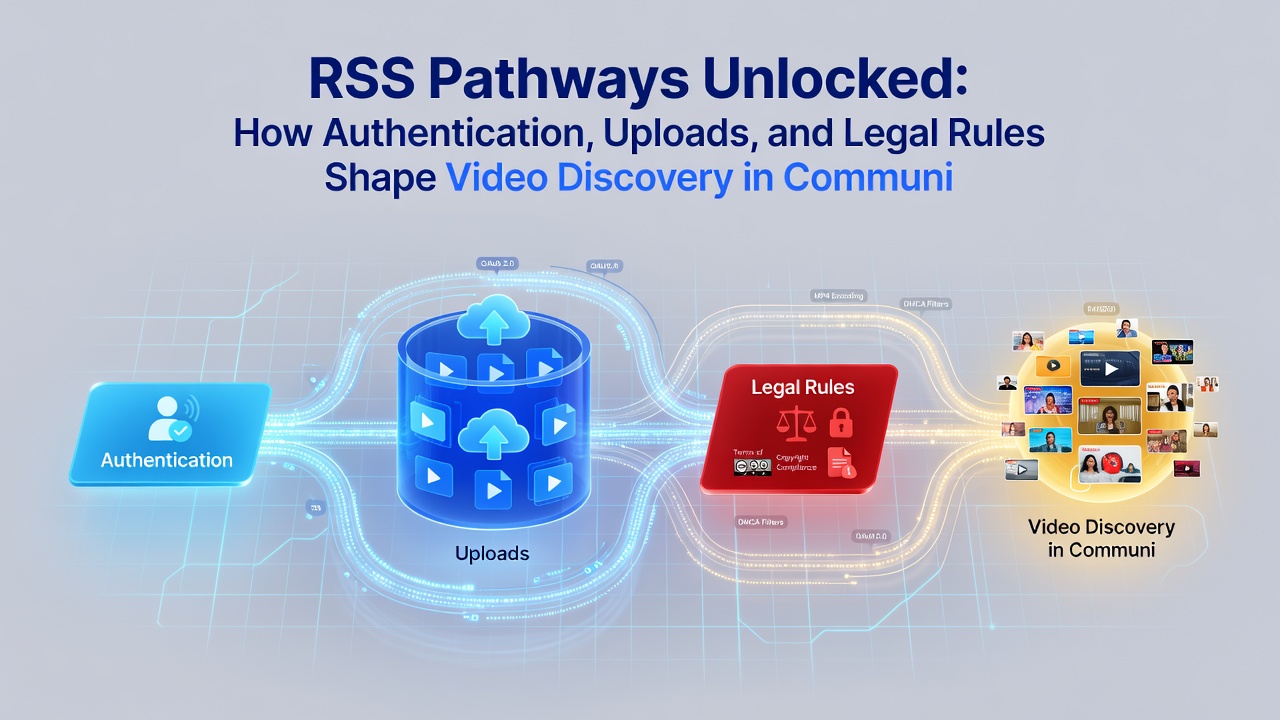
Platforms integrate automated checks during uploads to flag potential duplicates or policy violations before content reaches RSS distribution. This step preserves feed quality, since aggregators and external sites pull from these feeds and prioritize sources that maintain consistent, rule-compliant material. Studies from academic institutions reveal that upload systems with built-in compliance features correlate with higher engagement metrics for videos that eventually appear in RSS listings.
Legal Rules Governing Content Flow into RSS Feeds
Legal regulations shape the boundaries of what authentication and upload processes permit, particularly in areas of copyright, privacy, and platform liability. According to guidance from the European Commission on digital services, community platforms must implement measures that prevent infringing material from entering public feeds, which forces authentication systems to incorporate rights verification during account setup and upload confirmation. In the United States the Federal Trade Commission has issued statements on consumer data protection that affect how platforms handle user information tied to video uploads destined for RSS channels.
Industry organizations such as the Entertainment Software Association provide frameworks that gaming-focused community sites follow when establishing rules for user-generated content. These frameworks require clear documentation of ownership and licensing before videos enter RSS pathways, adn platforms that align with such standards report fewer takedown requests affecting their feeds. Observers note that variations in regional laws create different upload requirements, with some jurisdictions mandating additional consent forms that delay content availability in RSS outputs.
Interplay Between Elements in October 2026 Platforms
By October 2026 several community media environments had updated their systems to synchronize authentication logs with upload metadata, allowing RSS feeds to reflect only content that meets current legal thresholds. This integration reduces the risk of feeds distributing restricted videos while maintaining discovery speed for compliant material. Figures from research institutions demonstrate that platforms achieving this synchronization experience steadier subscriber growth for their RSS channels compared with those maintaining separate verification layers.
Upload tools now often include real-time legal notices that appear during the authentication flow, reminding contributors of distribution rules before files transfer. Such notices help maintain feed integrity because they filter content at the source rather than after RSS publication, which would require manual removal and potential subscriber disruption.
Conclusion
Authentication, upload procedures, and legal rules collectively determine the effectiveness of RSS pathways in community media systems by controlling content entry points and ongoing compliance. Platforms that coordinate these components produce RSS feeds that support reliable video discovery while adhering to regulatory expectations across regions. Continued adjustments in October 2026 and beyond reflect ongoing efforts to balance accessibility with the requirements that keep feeds functional and legally sound for all participants.